Laminate, quartz, granite and butcher block each wear and clean up differently. A practical comparison of heat, stains, maintenance and what to consider in a remodel or a rebuild.
Kitchen countertops take a lot of daily use: heat, knives, spills and cleaning. Laminate, quartz, granite and butcher block are four common choices, and they behave differently. This guide covers what each one is, how they hold up, and the questions worth asking before you pick a material.
What each countertop is made of
Laminate is a decorative layer and resin bonded to a particleboard or MDF core. Today's patterns cover a wide range of colors and can mimic stone, wood and solid surfaces, and there are several edge options, from a simple rolled or banded edge to more finished profiles. Laminate is lighter than stone and is typically quicker to install. It is a practical, budget-friendly choice that works well in many kitchens, as well as in laundry rooms, rentals and other hard-working spaces.
Quartz is an engineered stone. Crushed quartz is mixed with polymer resins and pigments, then formed into slabs. Because it is manufactured, the color and pattern are more consistent from slab to slab than natural stone, and many products are made to look like marble, concrete or other materials.
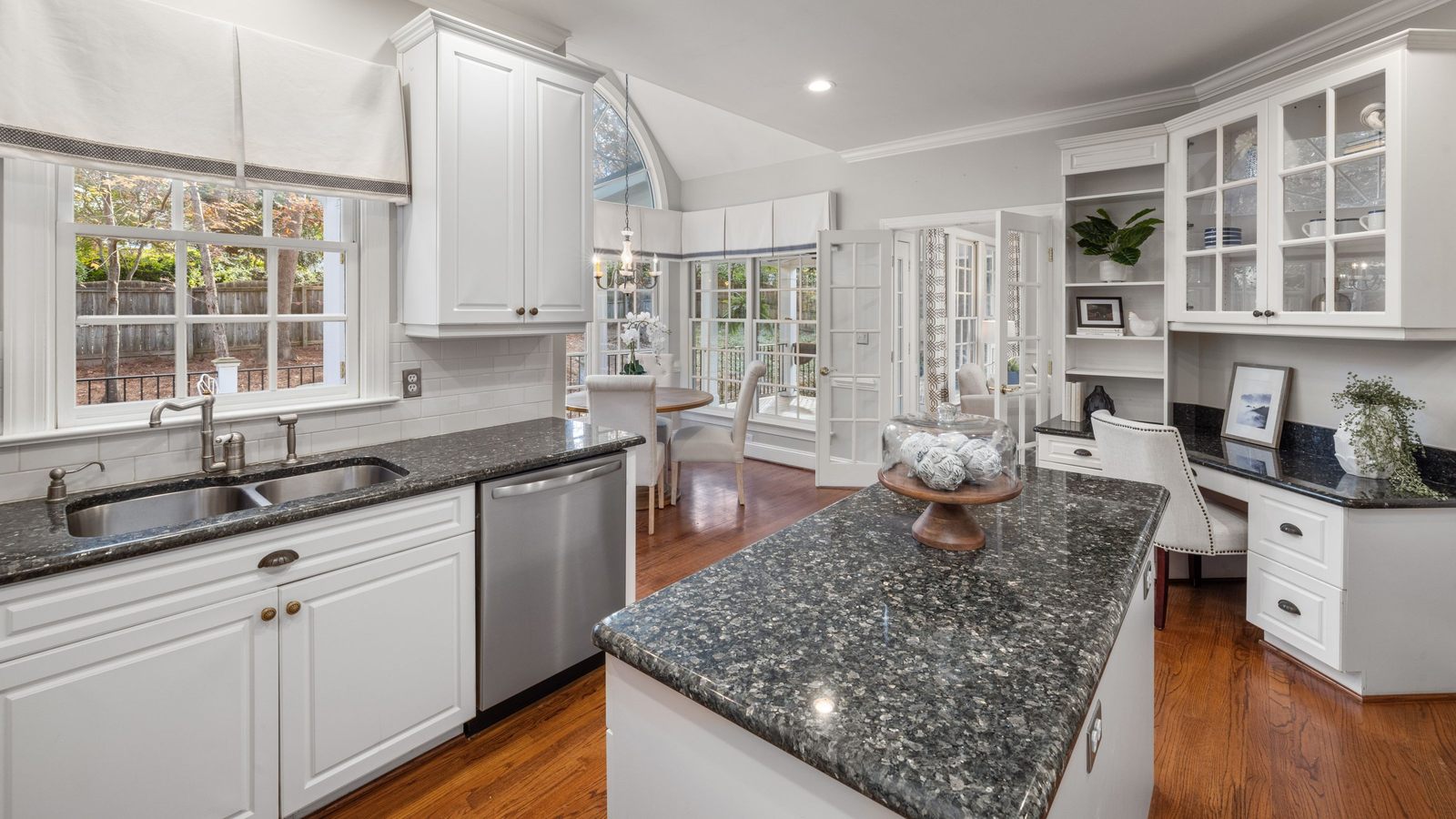
Granite is a natural stone. Each slab is unique, with its own color, movement and mineral pattern. You typically choose the actual slab that will be cut for the job, which matters when you want the island and the surrounding counters to relate to each other.
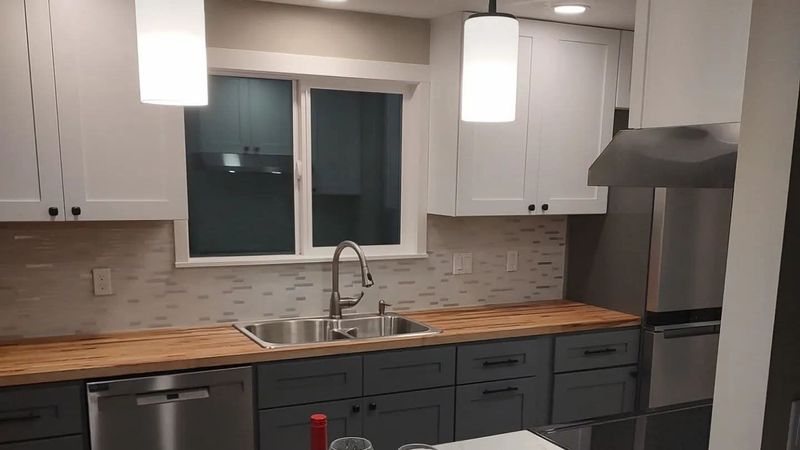
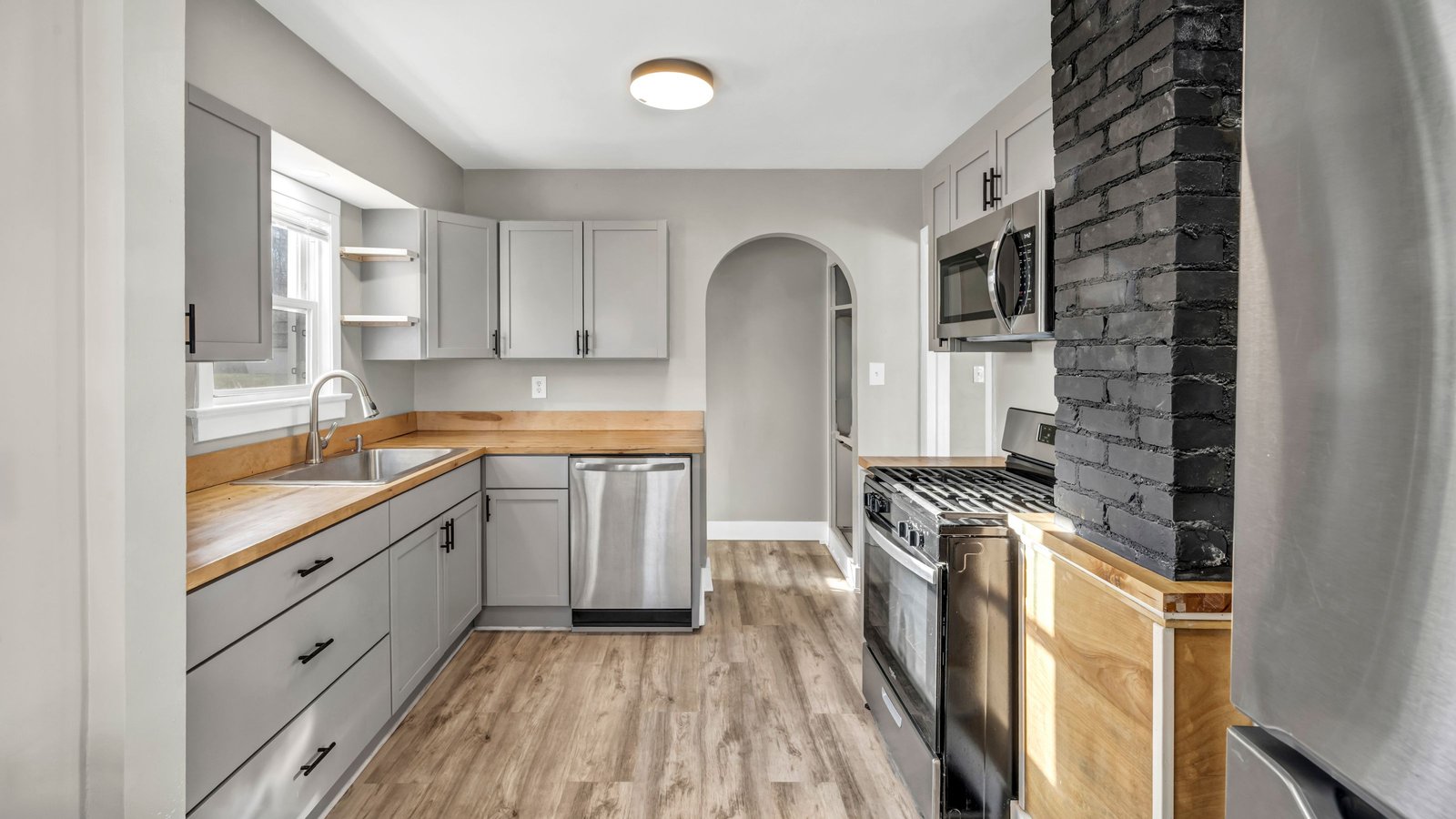
Butcher block is wood, usually made by laminating strips of hardwood into a slab (edge grain) or by joining end-grain blocks. Maple, walnut, oak and other hardwoods are all used. Because it is wood, it can be sanded and refinished later, which is a difference from stone and from laminate.
Heat, stains and everyday use
- Heat. Laminate, quartz and butcher block are all durable in daily use, but none of them is a good place for a hot pan straight off the burner. High heat can scorch or damage a laminate surface, and the resin in a quartz slab can also be damaged by direct high heat, so trivets or hot pads are the usual practice. Granite generally handles heat better because it is natural stone, though using a trivet is still a sensible habit and sudden extreme temperature changes are worth avoiding. Butcher block can scorch or darken from a hot pan, so it also needs protection from direct heat.
- Stains and moisture. Laminate is easy to wipe clean and holds up well to everyday spills when the surface is intact. The important caution is at the seams, sink cutouts and any place the core could be exposed: those areas should be kept sealed and dry, because the particleboard or MDF core can swell if water sits there. Quartz is non-porous, so liquids sit on the surface and are typically wiped away. Granite is a natural stone and is typically sealed to help resist stains; if the sealer wears, oil, wine or other liquids can leave a mark. Butcher block is more sensitive to standing water, especially around a sink. Spills should be wiped up, and the wood should be kept dry.
- Cuts and chips. None of these materials is meant to be treated roughly. Laminate can scratch, and unlike butcher block it cannot be sanded and refinished. A damaged section is relatively straightforward to replace, which is one reason it remains a practical choice. Knives can mark butcher block (and many people accept that as part of a wood counter), and they can also scratch stone or dull against it. Heavy objects can chip a stone edge. A cutting board is the simplest way to protect any of them.
Maintenance
- Laminate is easy to care for. A soft cloth and a mild, nonabrasive cleaner are usually enough. Avoid abrasive pads and harsh cleaners, which can dull the finish, and keep water from sitting at seams and around the sink.
- Quartz is generally low maintenance. It does not usually need sealing. Clean it with a soft cloth and a mild cleaner, and follow the manufacturer's guidance on what to avoid. Abrasive pads and some harsh chemicals can dull or damage the finish.
- Granite typically needs to be sealed when it is installed and resealed from time to time, depending on the stone and the sealer. A simple water-drop test is often used: if water darkens the stone and soaks in instead of beading up, it may be time to reseal. Use cleaners made for natural stone.
- Butcher block needs regular oiling with a food-safe finish, such as mineral oil, to keep the wood from drying out and to help it resist moisture. How often depends on use and climate. If the surface gets stained, scratched or worn, it can usually be sanded and oiled again, which is one reason people choose it.
Look, seams and edges
- Look at full-size samples in your kitchen, in daylight and at night, next to your cabinets and flooring. Store lighting can change how a color reads.
- Laminate offers a wide range of colors and patterns, including looks that resemble stone or wood. The edge detail matters, because it finishes the core and changes how close the counter comes to the look of a solid slab.
- For granite, visit the slab yard when you can, because no two slabs are the same. For quartz, a sample is a closer match to the finished slab, though large patterns can still vary.
- Stone counters are usually made from more than one piece, so ask where the seams will fall and how visible they will be. Laminate and butcher block are often joined in sections too, especially on a long run or an island.
- Edge profiles change the look: a simple eased or slightly rounded edge is common and easier to keep clean; more detailed edges add character but have more profile to wipe.
- Materials can be mixed, such as a stone or laminate perimeter with a wood island, if you like the contrast and are comfortable with different care in different spots.
Many homeowners use a remodel or an insurance rebuild as the time to upgrade from laminate to quartz, granite or butcher block. That is common, and it can be a good moment to change materials if you want a different look or a different kind of wear. Laminate remains a solid, practical choice in its own right, and when a counter is being restored to its pre-loss condition, comparable laminate is often what gets matched.
Questions to ask before you choose
- How do you use the counter? Heavy cooking and hot pans call for careful heat habits on any material, and especially on laminate, quartz and wood.
- Is the run along a sink or a dishwasher, where water will be a regular part of the day?
- Do you want a surface you can refinish later, a section that is straightforward to replace, or one with less routine upkeep?
- Will the counter be one continuous look through the kitchen, or do you want a different material on the island?
- What does the warranty or the fabricator require for installation, sealing and care?
During an insurance rebuild
After a covered loss, insurance generally pays to restore counters to their pre-loss condition, based on the scope approved with your adjuster. If the pre-loss counter was laminate, insurance generally covers comparable laminate. Matching can be difficult: a laminate pattern, a quartz color or a wood species can be discontinued, and granite slabs are unique. If only part of a counter is damaged, it is worth discussing early whether a repair, a section replacement or a full replacement makes sense. If you would like to change materials or upgrade during the rebuild, that is often possible. You typically pay the difference in cost.
Every policy is different, so your insurance provider is the best source for how yours applies.
If you have questions about countertops for a remodel or a rebuild, call or send a few details about your project.